
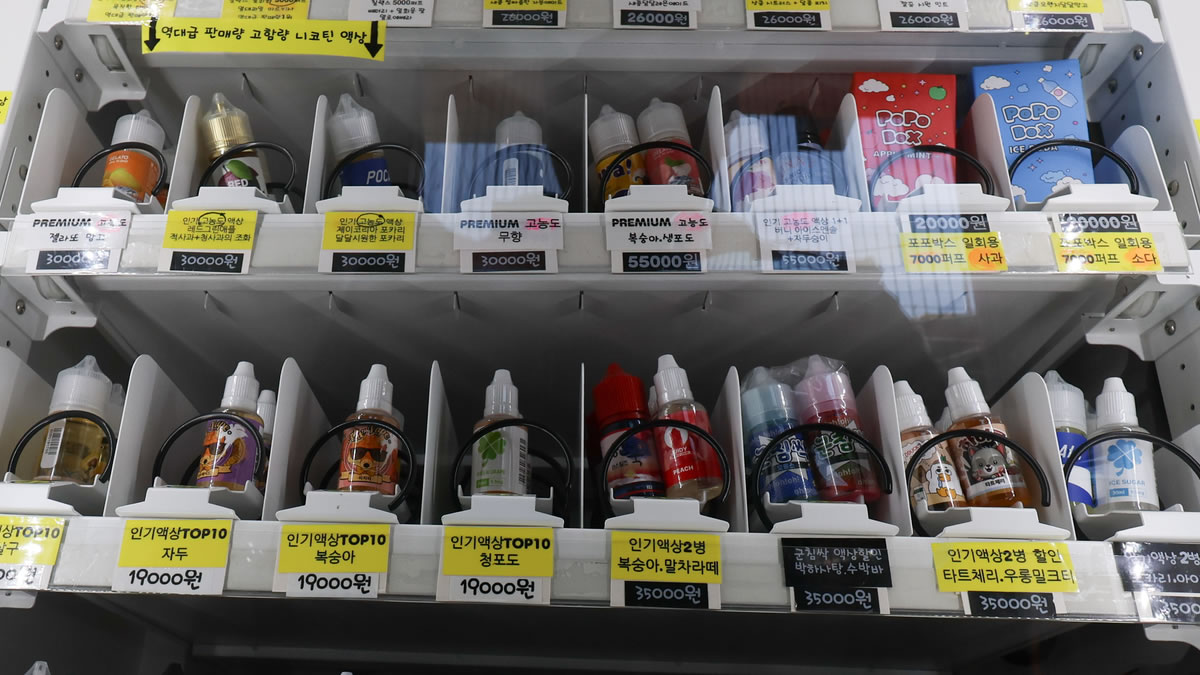
Starting April 24, South Korea will reclassify all nicotine-based products, including synthetic nicotine e-cigarettes, as “tobacco products.” This closes a major legal loophole, subjecting liquid vapes to strict regulations such as mandatory health warnings, advertising restrictions, and rigorous adult age verification, particularly for vending machines and unmanned stores.
Key Takeaways:
- Definition Expansion: “Tobacco” now includes synthetic nicotine products.
- Strict Compliance: Mandatory health warnings and advertising bans apply.
- Youth Protection: Vending machines require adult authentication; flavored labels restricted.
- Penalties: Violations carry fines up to 10 million won or imprisonment.
The South Korean government has confirmed a sweeping reclassification of all nicotine-based products as “tobacco,” effective April 24. This development occurs amidst rising concerns over unregulated youth access to synthetic nicotine vapes, directly resulting in the first major expansion of tobacco definitions in 37 years to close legal loopholes.
Closing the “Synthetic Nicotine” Loophole
For years, a legal blind spot in the Tobacco Business Act defined tobacco strictly as products made from tobacco leaf. This allowed synthetic nicotine e-cigarettes and vape juices to evade regulation. Unmanned vape shops and vending machines proliferated, often operating without retailer designation or strict age checks because their products technically weren’t “tobacco.”
The new revision changes this fundamentally. Any product containing nicotine—whether natural or synthetic—will now be legally classified as tobacco. This brings liquid e-cigarettes under the full scope of the National Health Promotion Act.
New Rules for Retailers and Vending Machines
The regulatory landscape for vape sellers is about to become much stricter. The Ministry of Health and Welfare has outlined several key mandates:
| Area of Regulation | New Requirement |
|---|---|
| Vending Machines | Must be installed by licensed retailers only; require robust adult-authentication devices; restricted to adult-only zones. |
| Marketing | Flavored-product labels appealing to youth are prohibited; strict limits on advertising. |
| Packaging | Mandatory health warnings must be displayed. |
| Public Use | Banned in all designated nonsmoking areas (fine: 100,000 won). |
Protecting Youth from “Invisible” Smoking
The urgency of this law is driven by shifting teenage smoking patterns. Government surveys reveal that liquid e-cigarettes have surpassed traditional cigarettes as the most used product among female students. Teens are drawn to the convenience and “stealth” nature of vapes, which often feature candy or fruit scents that are harder for adults to detect.
Recent inspections highlighted the danger of the previous system: out of 241 e-cigarette vending machines checked, roughly 11% allowed purchases without proper adult authentication. The new law aims to shut down this easy access.
Enforcement and Penalties
The Ministry of Health and Welfare plans to begin rigorous inspections of retail shops and unmanned stores in late April. The consequences for non-compliance are severe: violations such as improper advertising or failure to verify age can lead to fines of up to 10 million won ($6,890) or imprisonment for up to one year.

- Bangladesh Moves to Lift Ban on E-cigarette Vapes - April 2, 2026
- Ukraine Vape Ban Fails: 95% Illicit Market Costs 7.5B UAH - April 1, 2026
- E-Cigarettes vs. NRTs: Why Vaping is 40% More Effective for Smoking Cessation - March 28, 2026