
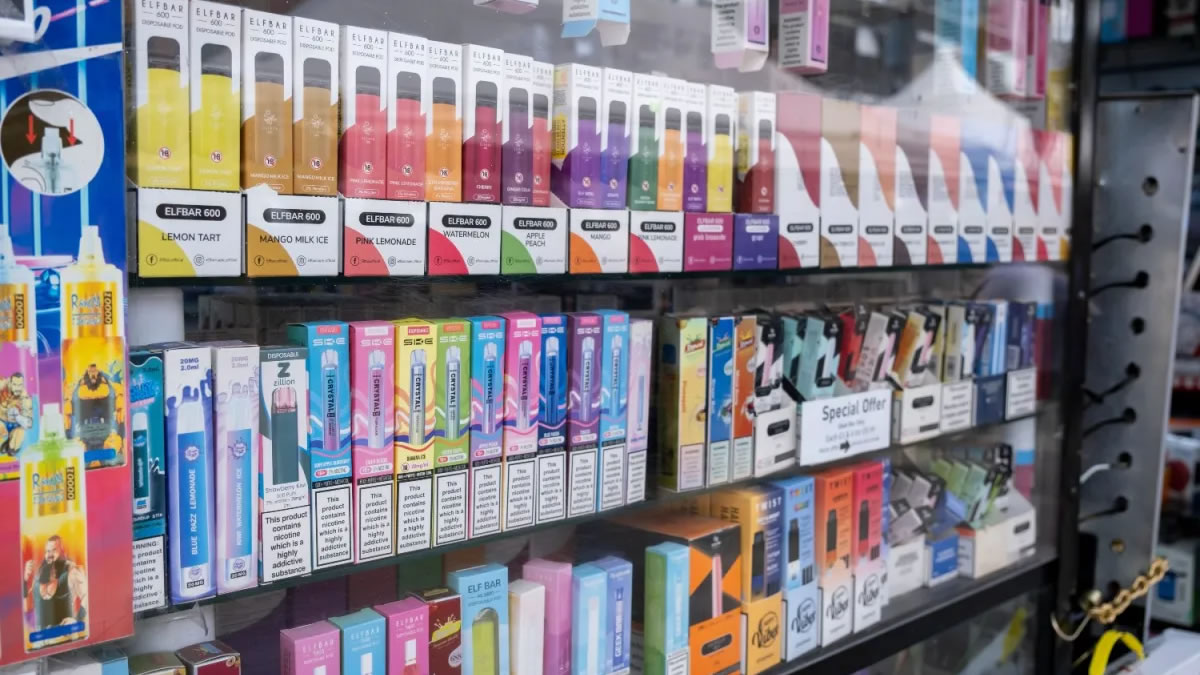
Fifteen years after specialized vape shops first appeared in France, the national e-cigarette sector has established itself as a structured economic pillar generating €1.2 billion in annual revenue in 2026. Data from Santé publique France and sector observatories show that the daily vaping population has stabilized around 3.9 million adults, marking an evolution from rapid expansion to market maturity.
Vaping in France remains primarily positioned as a smoking cessation method rather than an independent lifestyle commodity. Longitudinal public health surveys confirm that most adult adopters enter the category intending to quit smoking, driving a structural decline in dual users (those who smoke and vape simultaneously) in favor of exclusive vapers.
Vaping Demographics: A Decade of User Growth in France
The daily vaping population expanded steadily over the past decade before leveling off after 2022. Today, daily users represent 7.0% of the French adult population.
| Year | Daily Vapers (Millions) | Share of Adult Population |
|---|---|---|
| 2015 | 1.9 | 3.4% |
| 2018 | 2.7 | 4.9% |
| 2021 | 3.4 | 6.2% |
| 2023 | 3.8 | 6.9% |
| 2026 | 3.9 | 7.0% |
In addition to regular consumers, an estimated 1.5 million adults vape occasionally. Combined, these groups consume between 80 million and 100 million bottles of e-liquid each year across all formats.
Economic Footprint: Revenue, Employment, and Fiscal Contribution
According to aggregate data from the Interprofessional Vaping Federation (FIVAPE) and private market analysts, the French vaping sector accounts for €1.2 billion in annual turnover in 2026. This includes hardware kits, e-liquids, replacement coils, and related services.
The domestic ecosystem consists of several operational layers:
- Specialized Retail: Approximately 2,500 dedicated vape stores nationwide.
- E-Liquid Manufacturing: 150 domestic producers, including 30 facilities outputting more than one million bottles annually.
- Hardware Importers: About 15 major distributors supplying refillable pod systems and coils.
- Quality Assurance: Certified testing laboratories handling Tobacco Products Directive (TPD) compliance filings.
The sector sustains roughly 12,000 direct jobs across retail sales, factory production, logistics, marketing, and regulatory compliance. Net annual job creation has stabilized since 2023 in tandem with consumer numbers.
Unlike combustible tobacco, electronic cigarettes are not subject to a specific excise tax in France. The 20% Value Added Tax (VAT) applied to hardware and liquids delivers an estimated €200 million annually to the national treasury. Proposals for a dedicated vape excise tax continue to surface in parliamentary debates without gaining legislative approval.
French e-liquid brands also maintain an export footprint. Several manufacturers supply neighboring European markets, including Spain, Italy, Belgium, and Germany, alongside smaller shipping volumes to North America and the Middle East.
Retail Channels: The Growth of Specialized E-Commerce
Specialized brick-and-mortar vape shops remain the primary sales channel, but their market share has contracted as online retail expands.
| Distribution Channel | 2020 Market Share | 2026 Market Share |
|---|---|---|
| Specialized Physical Shops | 72% | 58% |
| Specialized Online Retailers | 18% | 28% |
| General Marketplaces | 5% | 8% |
| Tobacconists / Mass Retail | 3% | 4% |
| Other / Parallel Imports | 2% | 2% |
Specialized online platforms have captured 28% of the market. Hybrid operators, such as Stagvape.com, combine broad online catalogs and rapid shipping with the advisory standards historically found in physical shops.
Purchasing behavior varies by consumer experience. First-time buyers transitioning from smoking rely heavily on physical shops for personalized advice on nicotine strengths and device setup. Experienced vapers tend to purchase refills and hardware online for lower prices and home delivery.
Geographic imbalances also drive online adoption:
- Major Metropolitan Areas: High store density, averaging one shop per 25,000 to 30,000 residents.
- Mid-Sized Towns (20,000–100,000 residents): Balanced coverage with one shop per 15,000 to 20,000 residents.
- Rural Communes: Low coverage, with several rural departments containing fewer than ten specialty shops.
Consumers in rural areas often rely on e-commerce to avoid traveling long distances for replacement coils and liquids.
Data Gaps and Public Policy Considerations
Despite market maturity, several statistical gaps complicate public health analysis and policy planning:
- Unaggregated Sales Volume: France lacks a mandatory centralized registry tracking exact hardware and fluid volumes sold nationwide. Current figures rely on sample projections from manufacturers.
- Unregulated Parallel Trade: Cross-border purchases from non-TPD-compliant foreign websites are estimated at 5% to 10% of total volume, escaping standard chemical testing and nicotine limits.
- Transition Timelines: Data on the average duration required for a smoker to fully exit both tobacco and nicotine remain limited.
- Young Adult Demographics: Nuanced usage data among 18-to-25-year-olds categorized by employment or educational status remain sparse, leaving questions about non-smoker initiation.
To address these blind spots, public health bodies are considering a national sales observatory based on mandatory distributor reporting, expanded longitudinal studies by Santé publique France, and joint customs initiatives to monitor parallel online imports.
Frequently Asked Questions
-
What percentage of adults vape daily in France?
Approximately 7.0% of French adults, or 3.9 million people, vape daily according to Santé publique France data. An additional 1.5 million adults vape occasionally, consuming a combined total of 80 to 100 million e-liquid bottles annually.
-
Is the French vape industry expanding in 2026?
User volume has remained stable at 3.5 to 4 million daily consumers since 2022. Industry revenue continues to rise moderately to €1.2 billion in 2026, driven by premium hardware adoption and specialized e-commerce growth.
-
How many specialized vape shops operate in France?
France has approximately 2,500 physical vape shops in 2026. Density is highest in large urban centers and lowest in rural communities.
-
Does France collect specific excise taxes on vape products?
No. France applies standard 20% VAT to vaping hardware and e-liquids, yielding about €200 million annually, but does not levy a specific tobacco-style excise duty.

- Turkey Plans Digital ID Checks to Stop Underage Tobacco Sales - October 12, 2026
- Over One Million Never-Smokers Now Vape Regularly in Great Britain - October 12, 2026
- Pennsylvania Vape Directory Takes Effect Oct. 17: Rules and Fines - October 9, 2026